A recurring object gives the viewer something to recognize. The story comes from what changes around it.
In this music video treatment, a brass key stays the same while its meaning shifts: first it is something the character cannot leave alone; finally it is something she chooses to leave behind. That is a visual motif with a narrative job, rather than a prop that appears in every shot for decoration.
The Spare Key is a fictional teaching concept. Its AI-generated concept illustrations and untested prompt examples describe an intended sequence, not a completed VibeMV video or a customer result. No existing song or artist is being represented.
The treatment: The Spare Key
A woman sits in an apartment she is preparing to leave. One brass key lies on the table by the door. She watches it, picks it up, and stays where she is. We never meet the person associated with it; the hesitation tells us enough.
As the song develops, the key becomes less a promise of returning and more a decision she must make. She stands at the door, looks back into the room and pauses. Instead of showing every mechanical action, the edit returns to the table: the key is there again, now in warm light, and the door behind it is open.
The final wide image shows an empty entrance. Leaving the key has changed the room from somewhere that holds her to somewhere she has left. The object is unchanged. Her relationship to it is not.
This could fit a reflective song about leaving, attachment or starting again. If your song celebrates coming home, the same object could tell the opposite story: the key arrives, the door opens, and the room becomes occupied.
Follow the key through six beats
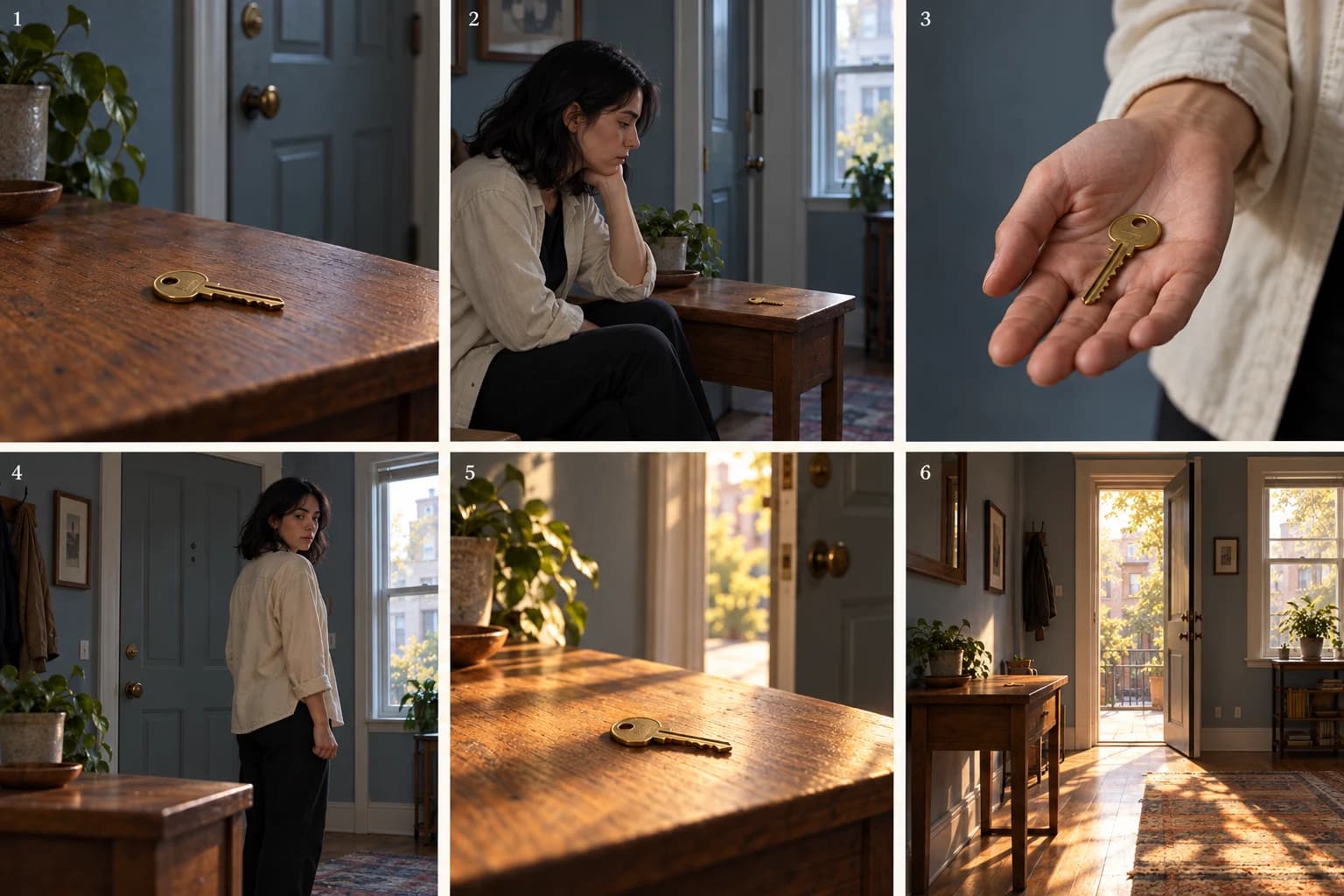
The numbered concept images below follow the story in pairs. Select an image to view the full board.
1. Introduce the object before explaining it
Show the key on the entry table with the closed door behind it. Give it enough space in the composition to be noticed. Avoid engraving a message on it or adding a flashback that explains the relationship immediately. The following image will supply context.
2. Show what it does to the person
Cut to the woman looking at the table. Her hesitation creates the connection between person and object. The audience does not need a close-up of tears; posture and the direction of her gaze can carry the scene. Keep the key visible if the framing allows it.
3. Change the relationship, not the prop
The key rests in her open palm. It is now a choice within reach. This insert needs a readable hand and a recognizable object, so do not bury it in complicated finger movement. A held image can do the job better than a long sequence of picking it up and turning it around.
4. Let the viewer anticipate the decision
She stands at the door and looks back. Keep the hand at her side; the key does not have to be visible in every frame. Its absence creates a question because we already know she has it. A prop repeated without interruption can become visual wallpaper.
5. Answer with a matching image
Return to the composition from beat 1. The key lies on the table again, but the open door and warmer light change its meaning. Cut from the pause to this result. Showing the outcome avoids depending on a precise hand-to-table action to communicate the story.
6. Make room for the ending
Show the empty entrance. Keep the table, key and open doorway readable. Hold if the song gives you space. A last-minute suitcase, new person or symbolic bird would open another story when this one is already complete.
These are narrative beats. They may become more or fewer shots after you listen to the track. Pick the actual musical turning point before assigning durations; this example has no tested timing map.
What makes the motif work?
Three things stay fixed: the key's recognizable shape, its connection to the doorway, and its importance to the character. What changes is who holds it, whether the door is open and whether the room is occupied.
That is why replacing the key with a flower in the middle would weaken this particular story. A new symbol needs its own introduction. Equally, “a key represents freedom” is only an interpretation until the sequence gives the viewer something to read.
Keep a short prop note, such as “one plain brass house key with a round bow and no tag.” If its exact design matters, use an appropriate reference and check each output. Do not imply that repeating these words locks the object across generations.
Build the story in VibeMV without mixing up the references
Use Main character for the woman. An object reference is additional guidance, not a replacement for the character input. If you upload a key or room image, explain its role in How should this image be used? For example: “Use only the brass key's shape; do not copy the hand or background.” Inspect the Creative plan to see how the reference has been assigned.
Put the narrative in Preferences → Story direction:
A woman considers leaving an apartment. One plain brass key
connects the story: alone on the entry table, held in her palm,
then left on the same table beside the now-open door.
End with the empty entrance. Keep one outfit and one apartment.
Use cuts to imply actions; no magical transformation or flashback.
The mood moves from attachment to a quiet decision.
Review the Creative plan for the object's appearances and the ending. Add the story yourself; the product does not transcribe and interpret your lyrics to discover this meaning.
For the opening insert, use a still-image description in Image prompt. After applying the plan, its Workspace editing box is labeled Generate image:
Close view of one plain brass house key with a round bow and
no tag, lying on a wooden entry table. Closed apartment door
visible behind it. Cool window light, simple uncluttered frame.
No person or hand in this image.
An optional Video prompt can request a held composition with very slight camera movement. For the final table shot, describe the open door and warmer light in its Image prompt. Do not ask one short video to perform the entire six-beat story.
Check Reference Images, then inspect the key in each Start frame. Watch again after generating motion: a correct still does not prove a convincing hand interaction. These narrative shots can use Scene; a separate visible singing shot would need its own vocal-performance plan. Creating or applying a Creative plan is free; new images and videos use credits.
Adapt the object to your song
Choose something the character can relate to physically: a letter kept or discarded, a jacket worn or left on a chair, a cassette played or put away. Write three states: what it means at the start, what the character does about it, what we see at the end.
Avoid relying on tiny readable lettering or an exact moving mechanism unless you can produce and verify it. You can often communicate the choice through the images before and after an action. For the details of sequence planning, use the storyboard guide; for references across shots, use the character and reference guide.
Frequently asked questions
What is a visual motif in a music video?
A visual motif is an image, object or action that returns with a recognizable connection. Its meaning can develop as the context changes. In this fictional example, the same key first suggests attachment and later a decision to leave.
Can an AI prompt keep a prop identical across shots?
A description and appropriate reference images can guide a recurring prop, but they do not guarantee an identical object. Inspect its shape, scale and placement in each Start frame and inspect interactions again in the generated video.
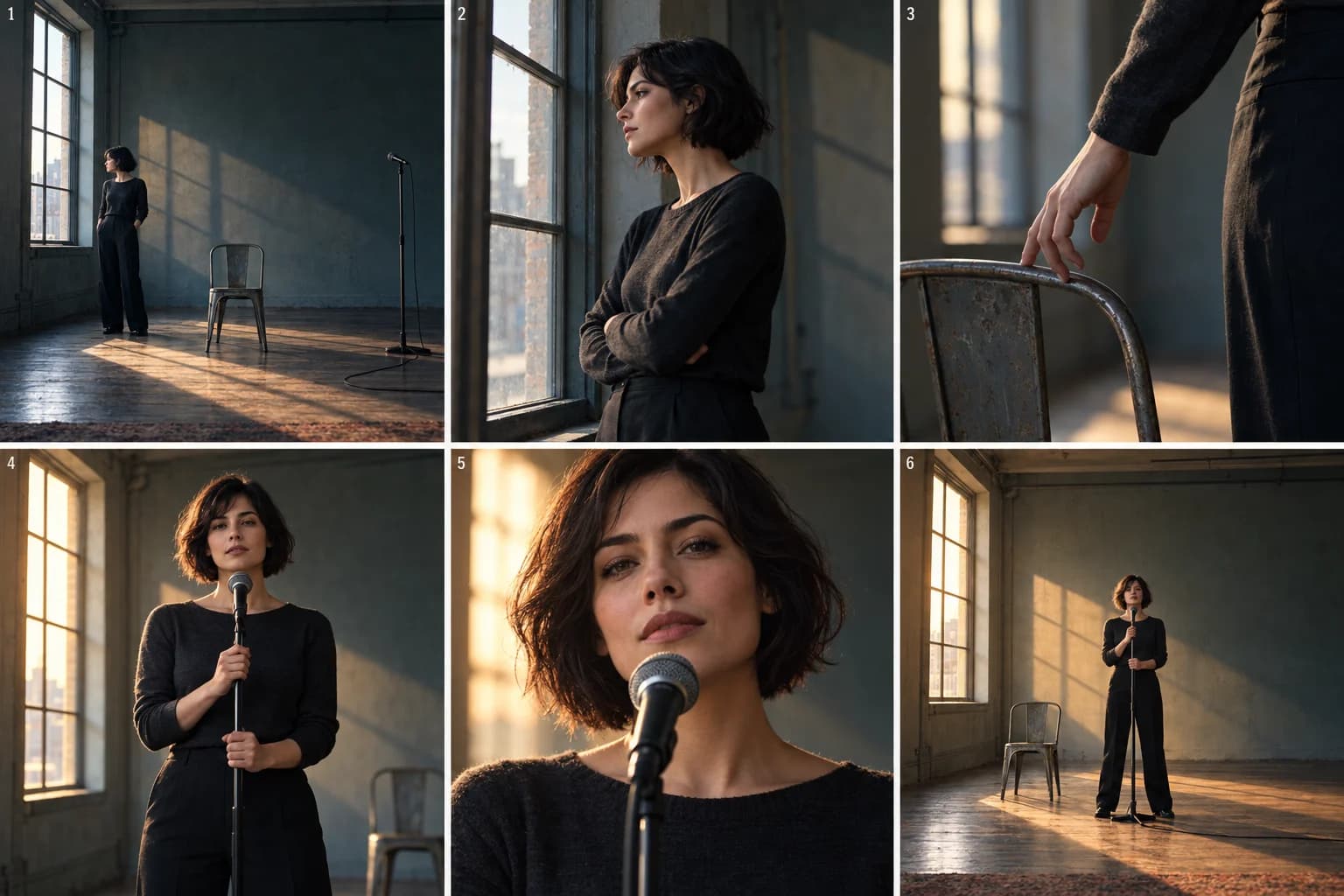
For a story carried by the performer instead of a prop, read the one-room performance treatment. For a visual contrast between public and private selves, read the two-worlds treatment. Compare the treatment approaches, or start with your song.
To repeat an event rather than an object, compare the narrative-loop treatment.
More Posts
Dreamlike music video: a surreal treatment with a clear story
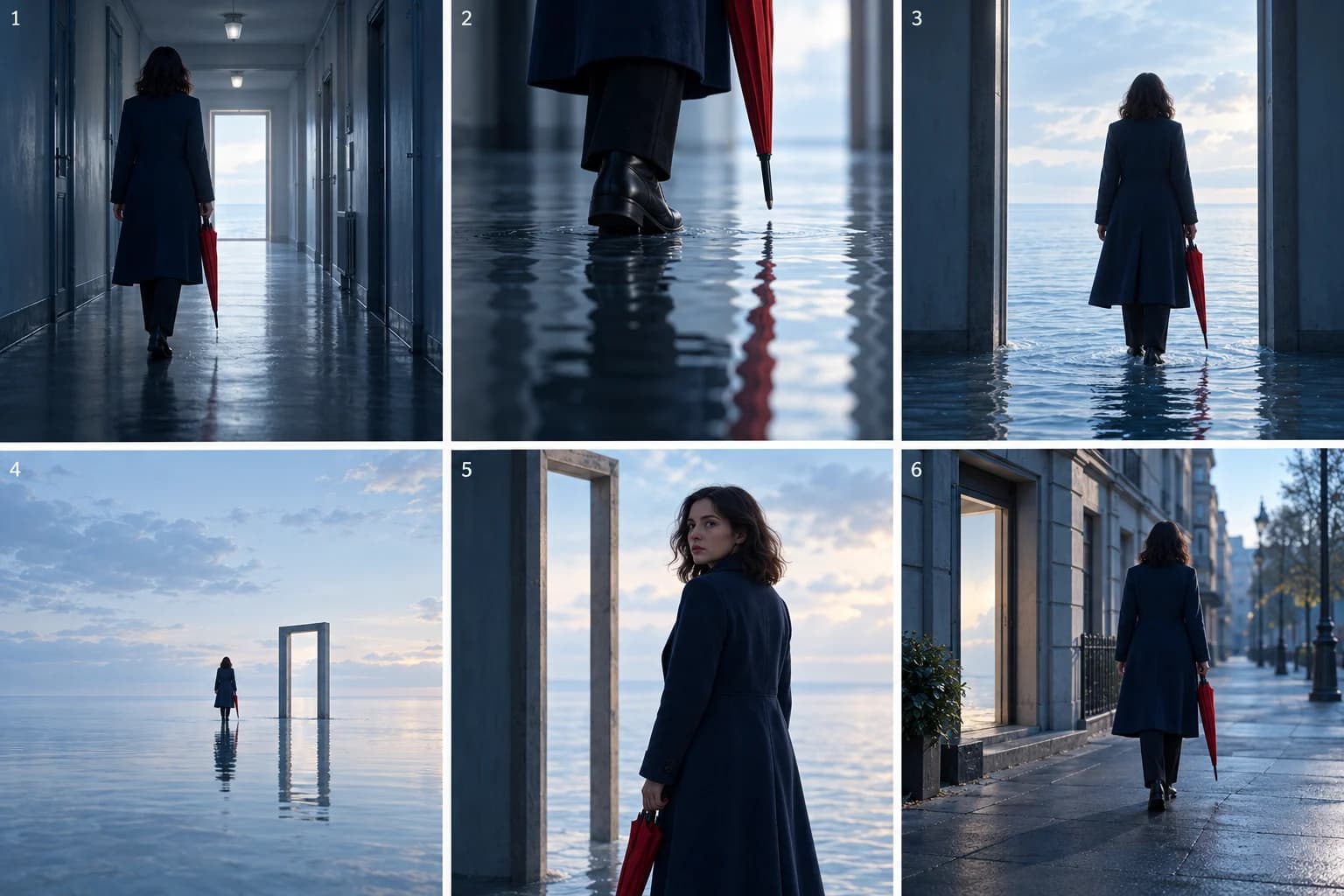
Plan a dreamlike music video that holds together. Follow a corridor-to-sea concept using recurring shapes, a clear journey and six illustrated beats.
Narrative loop music video: repeat a scene, change its meaning
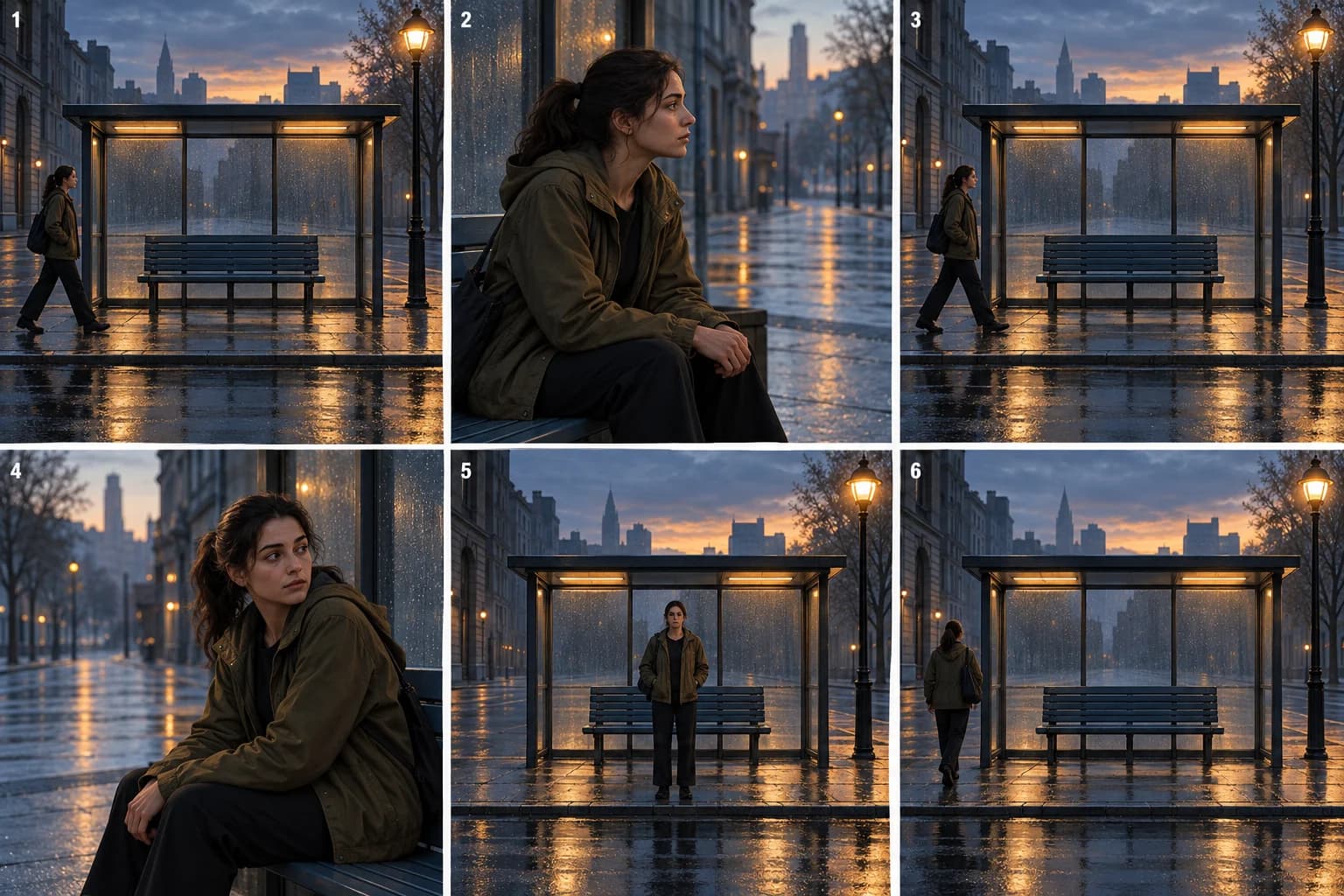
Build a narrative-loop music video around a recurring street scene. Follow six illustrated beats and learn what to repeat, change and resolve.
One-room music video: a performance treatment example
Build a one-room music video around one performer. Follow a six-beat treatment using framing, light and movement, then adapt it in VibeMV.