You have a song. Now decide what the audience will follow: a performance, a decision, a contrast, a recurring event, a strange journey or a memory.
These music video treatment examples develop those six choices into separate, illustrated guides. Each includes a complete fictional concept, six visual beats, the reasoning behind the sequence and directions you can adapt in VibeMV. The illustrations show proposed images, not completed video tests or customer projects.
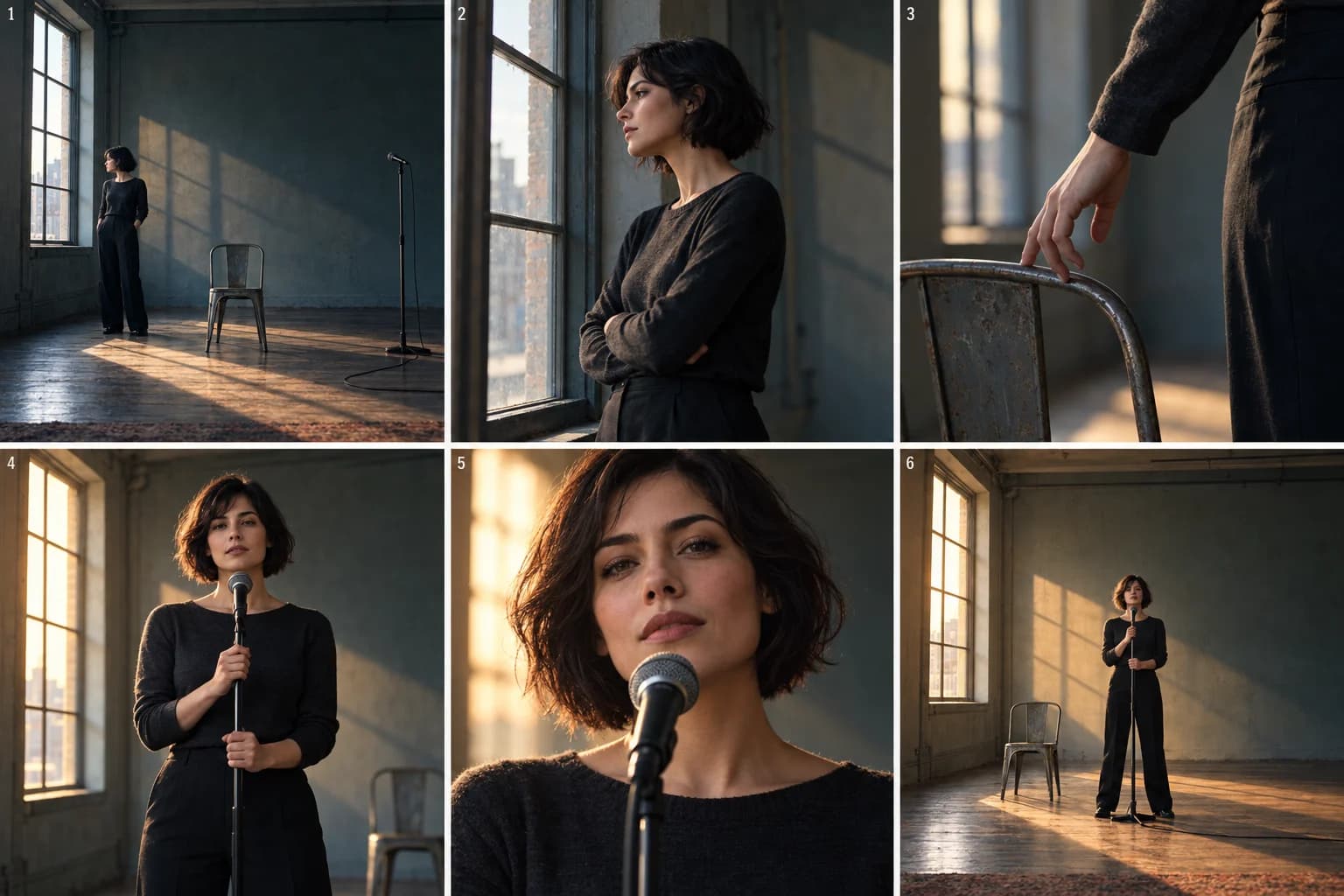
Keep the performance in one room
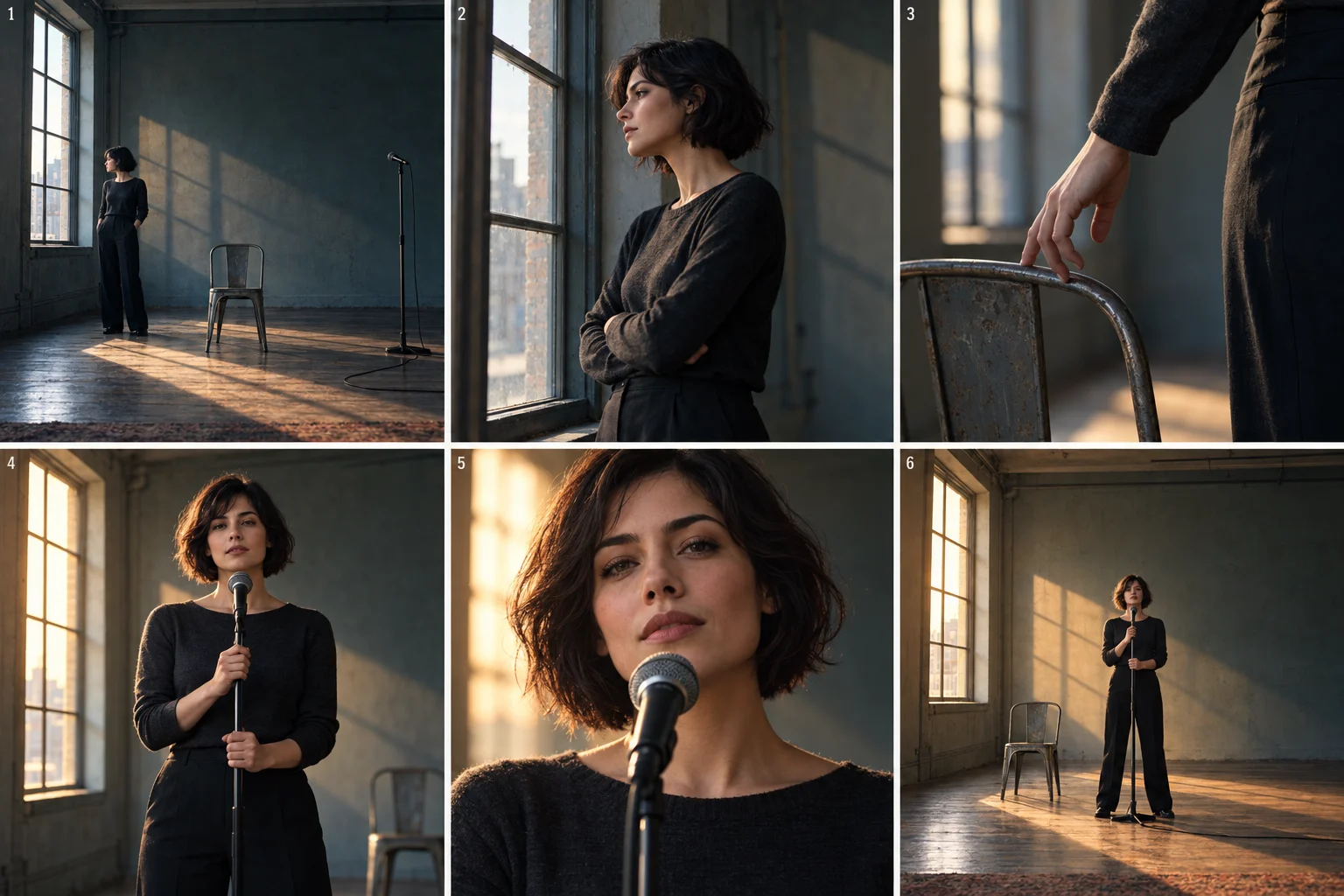
A singer starts at the edge of a rehearsal room and finishes at its center. The room stays familiar while camera distance, posture and light develop the performance.
Choose this when the song's voice or emotional build can hold attention. It gives you a reason to vary shots without inventing a different location for each one. It still requires careful performance, character continuity and, where needed, vocal synchronization.
Read the one-room performance treatment →
Let one object carry the story
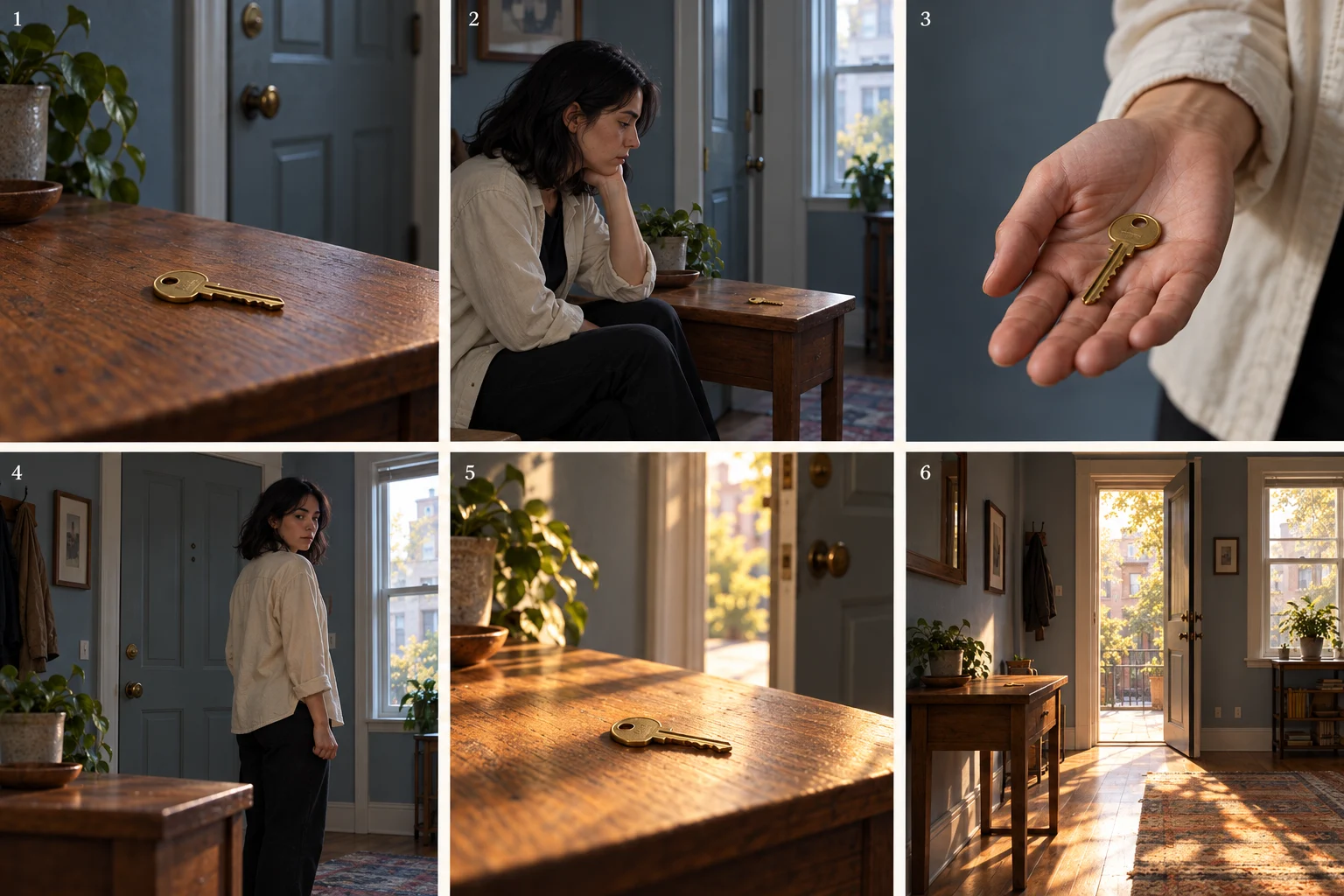
A woman hesitates over a key to an apartment, then leaves it behind. The story comes from the object's changing relationship to the character, not from the key transforming into something else.
Choose this when your song suggests a decision, memory or attachment that can be made visible. It can work without a singing close-up. The main production challenge is keeping the prop recognizable and making any hand interaction convincing.
Read the visual-motif treatment →
Put two visual worlds in conversation
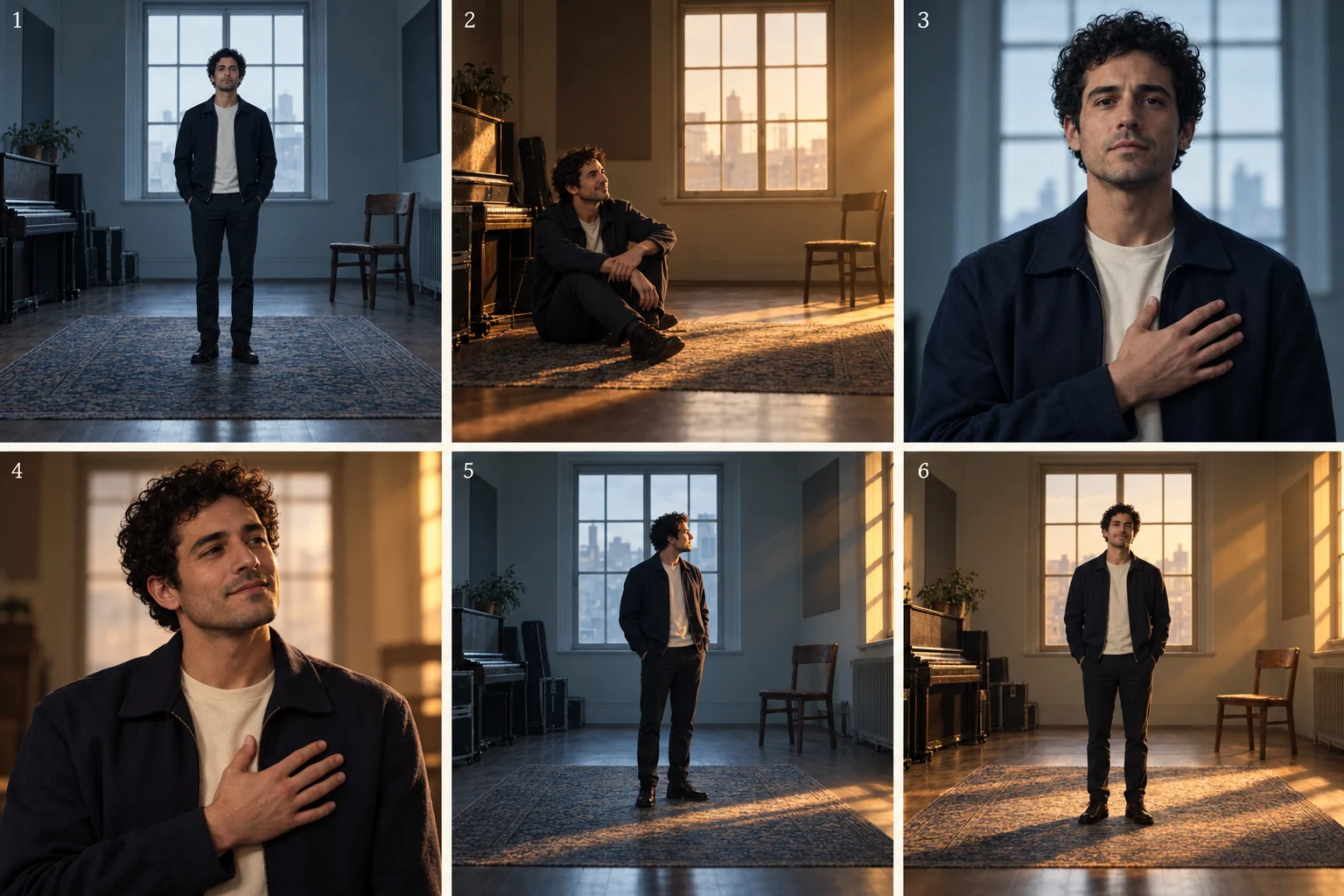
The same performer appears in a cool, ordered room and a warmer, less formal version of it. A repeated gesture links the two; the final image lets one world's light enter the other.
Choose this when your song contains tension between how someone looks and feels. It uses separate shots and matched cuts, not a required split-screen or seamless transformation. The contrast needs to stay readable without making the performer look like two unrelated people.
Read the two-worlds treatment →
Repeat a scene until the character changes it
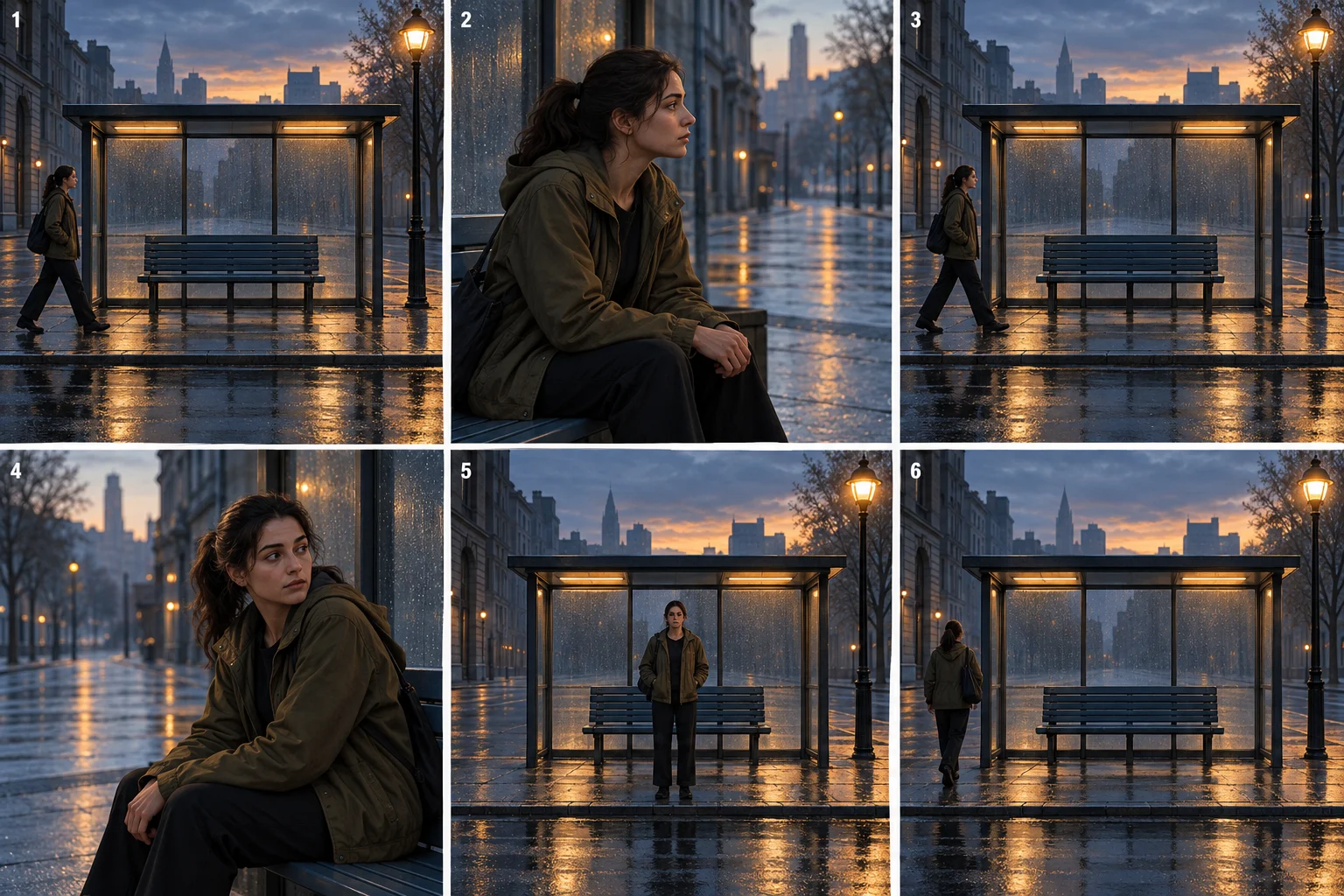
A woman repeatedly arrives at the same bus shelter. The familiar composition teaches us what to expect, until she stops following the routine. Choose this for a song about habit, waiting or an unresolved question. Exact reuse of a clip is an editing requirement, not a result guaranteed by repeating a prompt.
Read the narrative-loop treatment →
Take a clear journey through impossible spaces
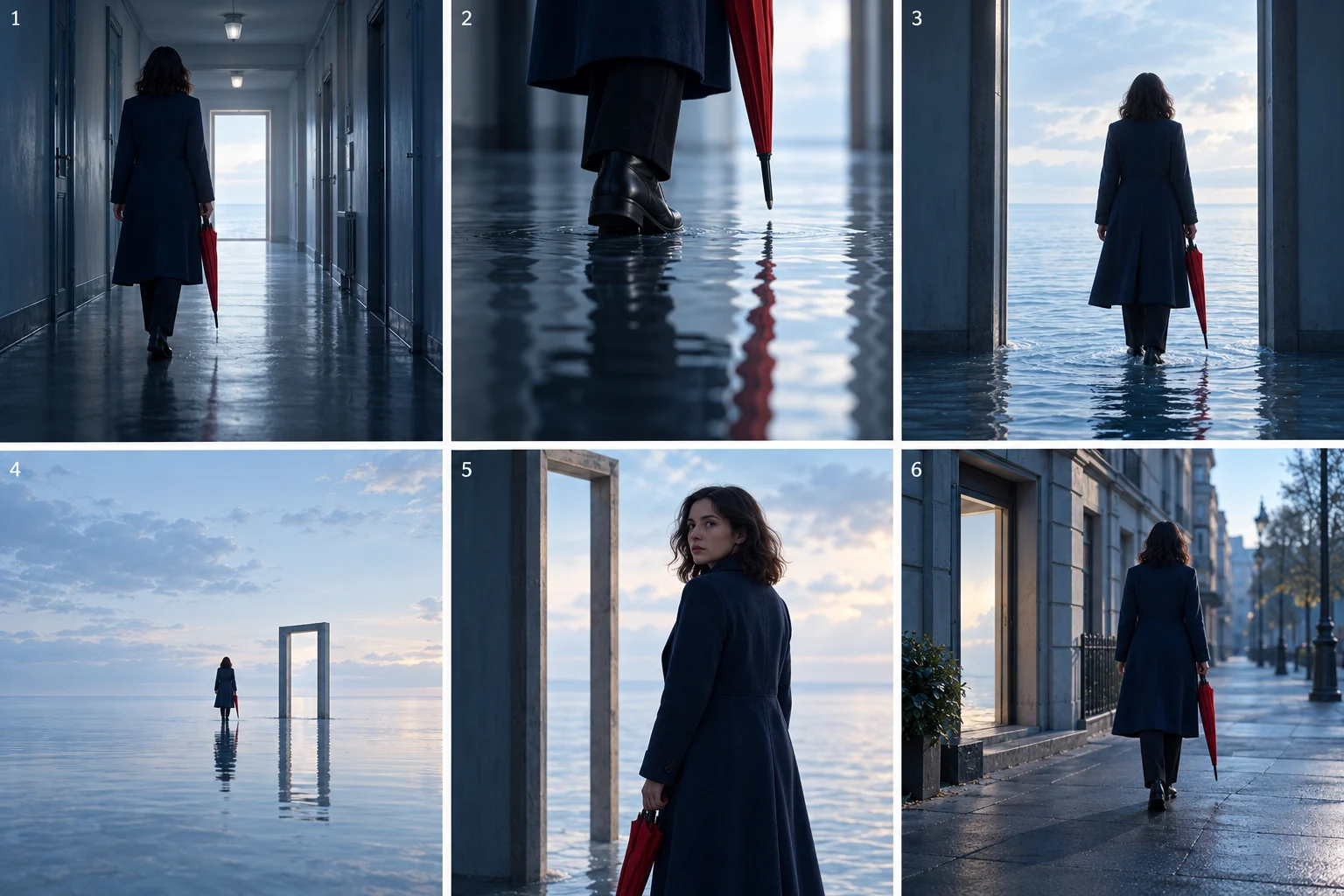
A corridor opens onto quiet water before the character returns to an ordinary street. Recurring shapes and a clear direction make the surreal images feel connected. Choose this when a change of space can express the song's emotional movement. The idea works through cuts; a seamless transformation is optional and needs its own test.
Read the dreamlike treatment →
Make a retro look belong to a story
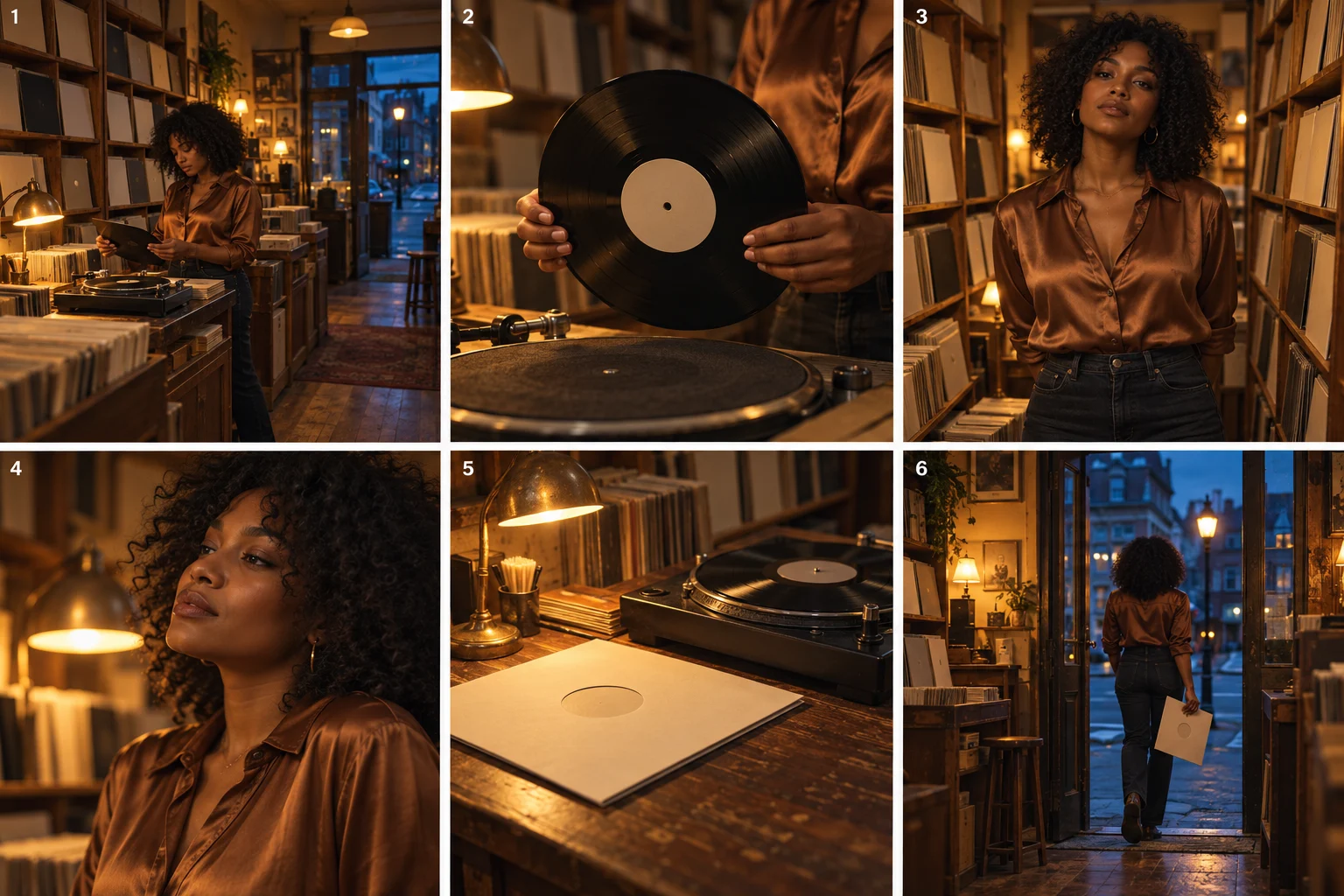
A singer stays in a record shop after closing, then takes a record into the night. Lamps, wood and sleeves support the action. Choose this when a sense of memory belongs to the song. It is a period-inspired fictional world, not an archival clip or a promise of exact historical accuracy.
Pick the idea your song can actually support
Ask what changes between the first and last image. In Last Light, it is the performer's relationship with the audience. In The Spare Key, it is a decision shown through an object. In After the Applause, it is the boundary between two ways of presenting oneself. The remaining examples develop recurrence, a journey through space and the relationship between a memory and its setting.
You can combine these approaches later. First choose the change the viewer should notice. An extra symbol or location should help communicate it, not simply make the plan bigger.
If you need the document's section structure, use How to Write a Music Video Treatment. If the concept is clear and you need timing, use the storyboard guide and blank CSV. Each has a different job from the creative examples here.
Ready to apply your own direction? Start from your song, set the Main character and Story direction, and review the Creative plan before generating media.
More Posts
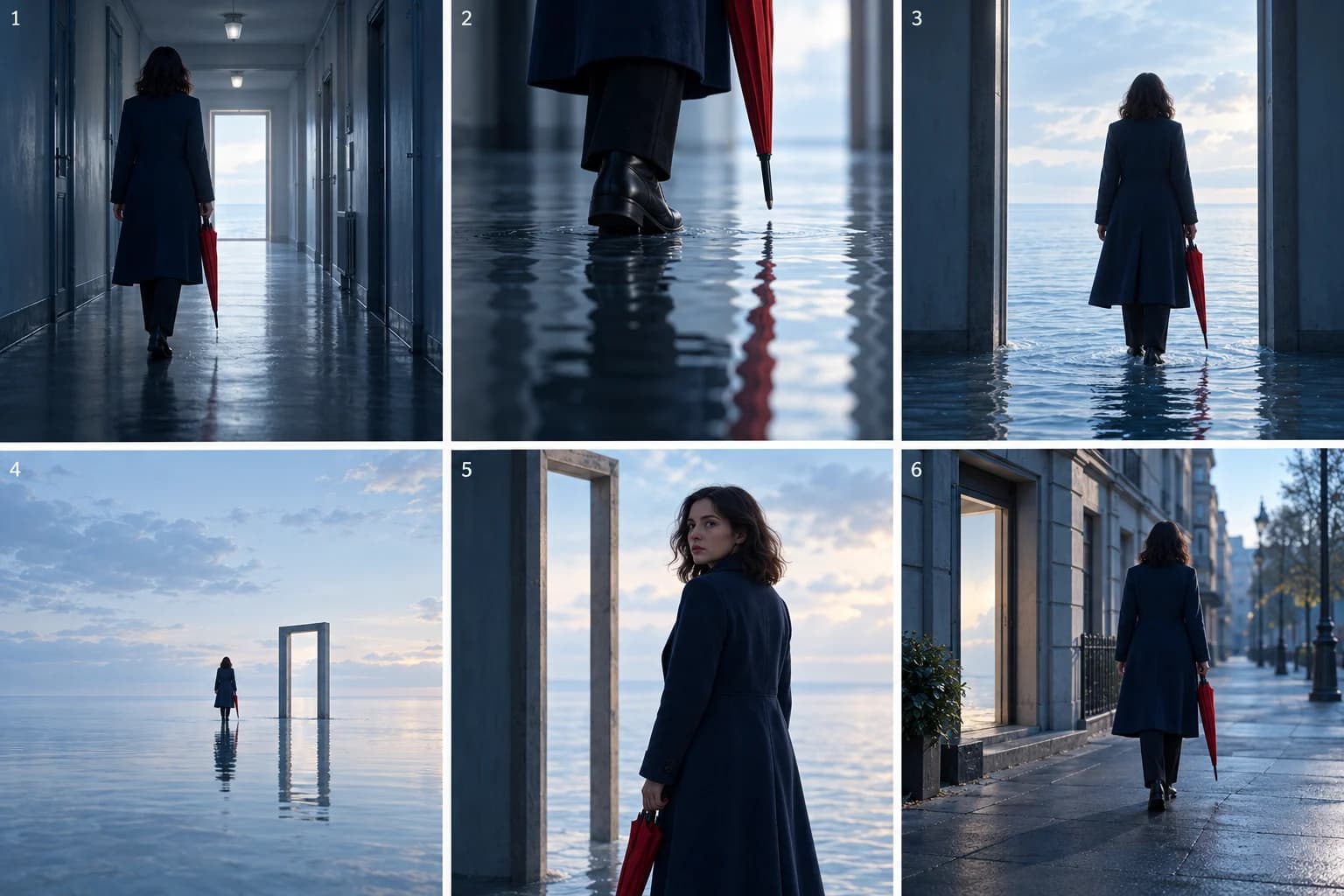
Dreamlike music video: a surreal treatment with a clear story
Plan a dreamlike music video that holds together. Follow a corridor-to-sea concept using recurring shapes, a clear journey and six illustrated beats.
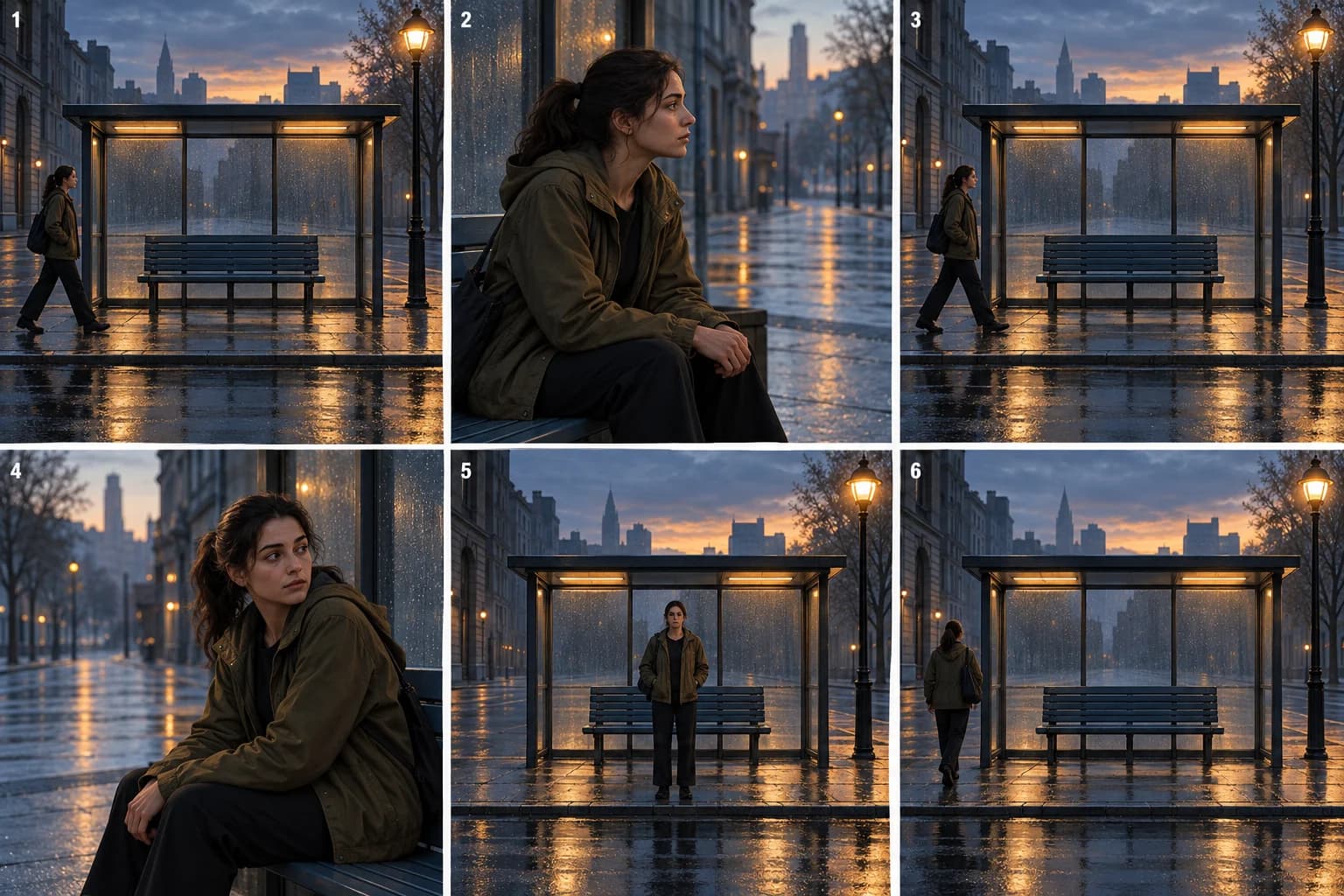
Narrative loop music video: repeat a scene, change its meaning
Build a narrative-loop music video around a recurring street scene. Follow six illustrated beats and learn what to repeat, change and resolve.
One-room music video: a performance treatment example
Build a one-room music video around one performer. Follow a six-beat treatment using framing, light and movement, then adapt it in VibeMV.