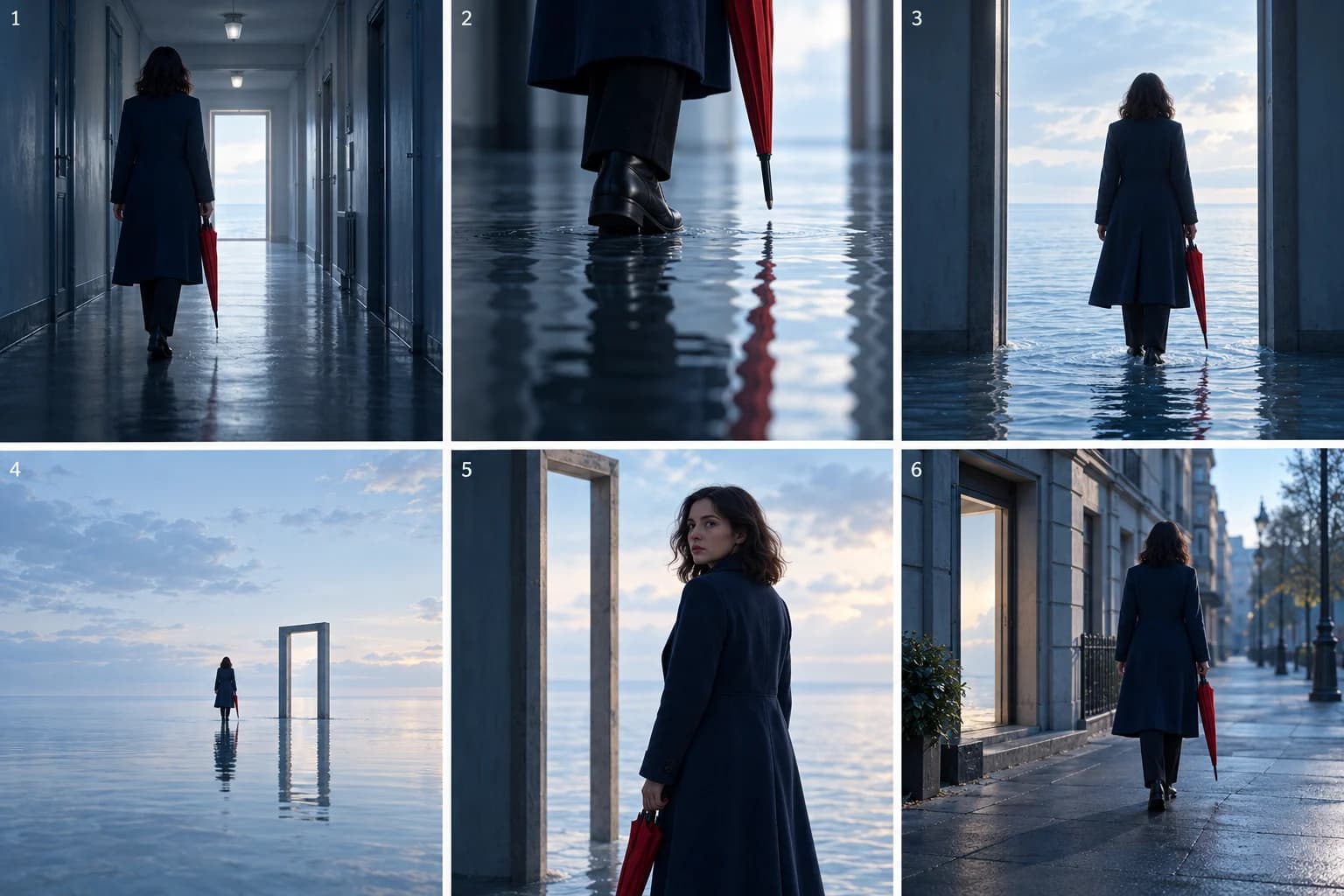
A corridor opens onto a sea. A doorway stands where a wall should be. These images can be striking, but a dreamlike music video needs more than a collection of impossible places. The viewer still needs something to follow.
Here, one character travels from confinement to open space, then returns to an ordinary street. A red umbrella and the shape of a doorway connect the journey. The world becomes strange; the direction remains simple.
A Door Beyond the Rain is a fictional teaching concept. The AI-generated illustrations show planned images, not a tested VibeMV video. The prompts are untested, and the proposed cuts do not imply that one model can create a seamless corridor-to-sea transformation.
The treatment: A Door Beyond the Rain
A woman walks down a narrow corridor carrying a closed red umbrella. She is dressed for weather that has not arrived. A door at the end is brighter than the walls around it.
She notices a shallow reflection underfoot. Beyond the door is an expanse of quiet water under a pale sky. She steps into that open space, keeping the umbrella closed. The doorway remains behind her, a familiar rectangle in an unfamiliar landscape.
She turns back, but the corridor no longer needs to contain her. The final cut finds her on an ordinary street after rain, carrying the same umbrella. Nothing announces whether she dreamed the journey. The difference is in how freely she occupies the frame.
The emotional movement is narrow → open → ordinary, seen differently. Use that to choose images. A floating staircase or an unrelated creature might look impressive but would start another visual argument.
Begin with somewhere the viewer understands
The paired images are concept illustrations. Select one to view the whole six-frame board.
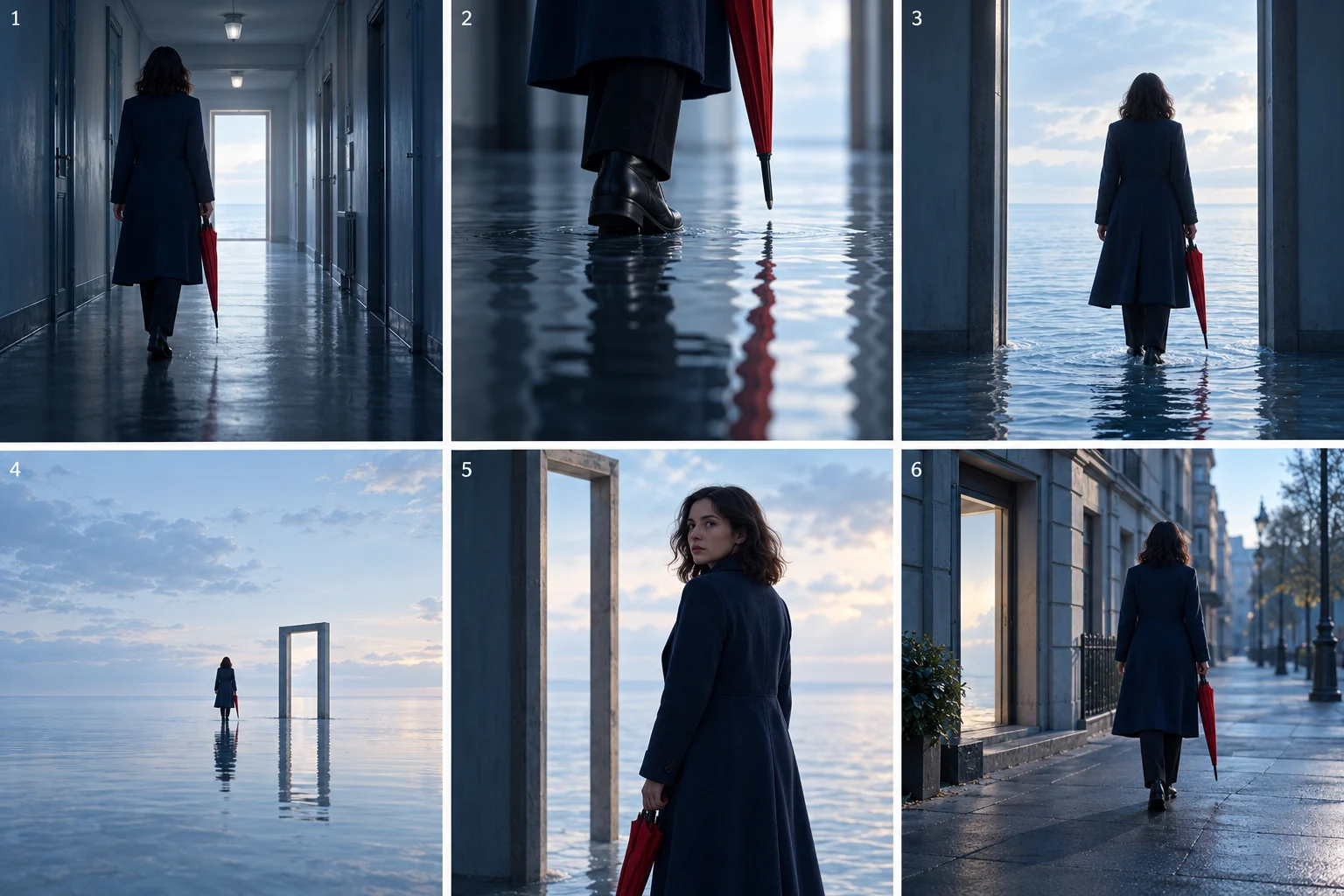
1. Make the ordinary place specific
The corridor has a clear direction and one bright doorway. Keep the opening simple enough to understand before changing its rules. The red umbrella is easy to recognize against the blue-gray setting; it is a continuity anchor, not a symbol the article claims has one universal meaning.
2. Introduce one change before revealing the new world
A low detail shows a thin reflective surface under her shoes. This offers a clue before the wide reveal. It does not need a shot of water visibly flooding the building. Cutting to a changed state can communicate the shift without a complex fluid simulation.
3. Connect the impossible view to a familiar shape
Show her at the rectangular doorway with the pale horizon beyond. The umbrella, coat and rear view connect this image to the corridor. A doorway-to-horizon cut is enough; the viewer can imagine the crossing. Do not require a single moving shot to prove the architecture is physically continuous.
4. Let the song feel the change in scale
Go wide when the music opens up. Make her smaller within the water landscape so the frame offers space the corridor could not. Hold the same limited palette. Introducing a new planet, forest and city here would compete with the simple experience of arriving in openness.
5. Bring the person back into the landscape
A closer profile lets us read a pause and a look back. The doorway is still available, but she is no longer pressed into a narrow frame. The umbrella stays closed. If she opened it, that would add a new action to explain; save the attention for her choice of direction.
6. Finish with an ordinary image that now feels different
Cut to the ordinary street after rain. Keep the person and umbrella recognizable, but let the composition have more air than the first corridor. The ending does not need an “it was all a dream” reveal. The ordinary world can carry the feeling of the open landscape.
Connect scenes with cuts before asking for transformations
There are several ways to link the doorway and the sea. Cut on her gaze, repeat the rectangle in the next composition, or follow a rear view with a wider rear view. These are decisions about an edit, not effects a Video prompt automatically applies between separate Shots.
If a seamless transition is central to your concept, test that specific transition before building the rest of the video. This treatment can work with separate images, so it does not depend on that effect. Inspect horizons, reflections, shoes and the umbrella carefully; surreal subject matter is not a reason to overlook accidental errors.
The same restraint applies to symbolism. The umbrella does not have to stand for five different ideas. It gives the character a recognizable silhouette while the surroundings change.
Plan the journey in VibeMV
Set the woman in Main character, then use Preferences → Story direction for the route and recurring anchors:
A woman in a midnight-blue coat carries a closed red umbrella.
She begins in a narrow blue-gray corridor. A rectangular doorway
leads to calm shallow water and a pale open horizon. Keep that
doorway visible in the open landscape. End on an ordinary
morning street after rain with the same person and umbrella. Use separate
shots and cuts, not a required continuous transformation.
Review the Creative plan for the sequence before applying it. For the threshold image, the Image prompt could be:
Rear full-body view of the selected woman in a midnight-blue coat,
closed red umbrella at her side. She stands at a rectangular
doorway. Beyond it is a pale horizon and calm shallow water.
Simple architecture, soft blue light, no other people.
Keep this still-frame description separate from the optional Video prompt, such as “She pauses and shifts her weight slightly. Camera remains still.” A request to walk through a doorway, change environments and reveal a new face in one shot creates several things to verify at once.
In the Workspace, edit the image description in the Image step's Generate image box and inspect Reference Images. Check the coat, umbrella and doorway in the Start frames, then inspect them again in motion. Creating or applying a Creative plan is free; generating images and videos uses credits.
These illustrated scenes are non-vocal story images. If your version includes a singing portrait, plan an appropriate Lipsync shot separately. The product will not infer this surreal story from your lyrics; supply its meaning and progression yourself.
Adapt the dream without losing the thread
You could replace the corridor with a lift lobby and the water with a field of long grass. Keep the change in spatial feeling and one recognizable route marker. Before adding another impossible image, ask what it changes for the character.
For a story based on contrast between two stable environments, read the two-worlds treatment. For timing the journey to your song, use the storyboard guide.
Frequently asked questions
How do you keep a surreal music video from feeling random?
Give the character a clear journey and repeat a small set of visual anchors. Let each impossible image develop the same emotional idea. In this example, a doorway, shallow water and a red umbrella connect the scenes.
Does a dreamlike video need seamless AI transitions?
No. Separate shots and well-chosen cuts can connect impossible spaces. A seamless transformation is an additional production requirement that should be tested; it is not necessary for this treatment.
More Posts
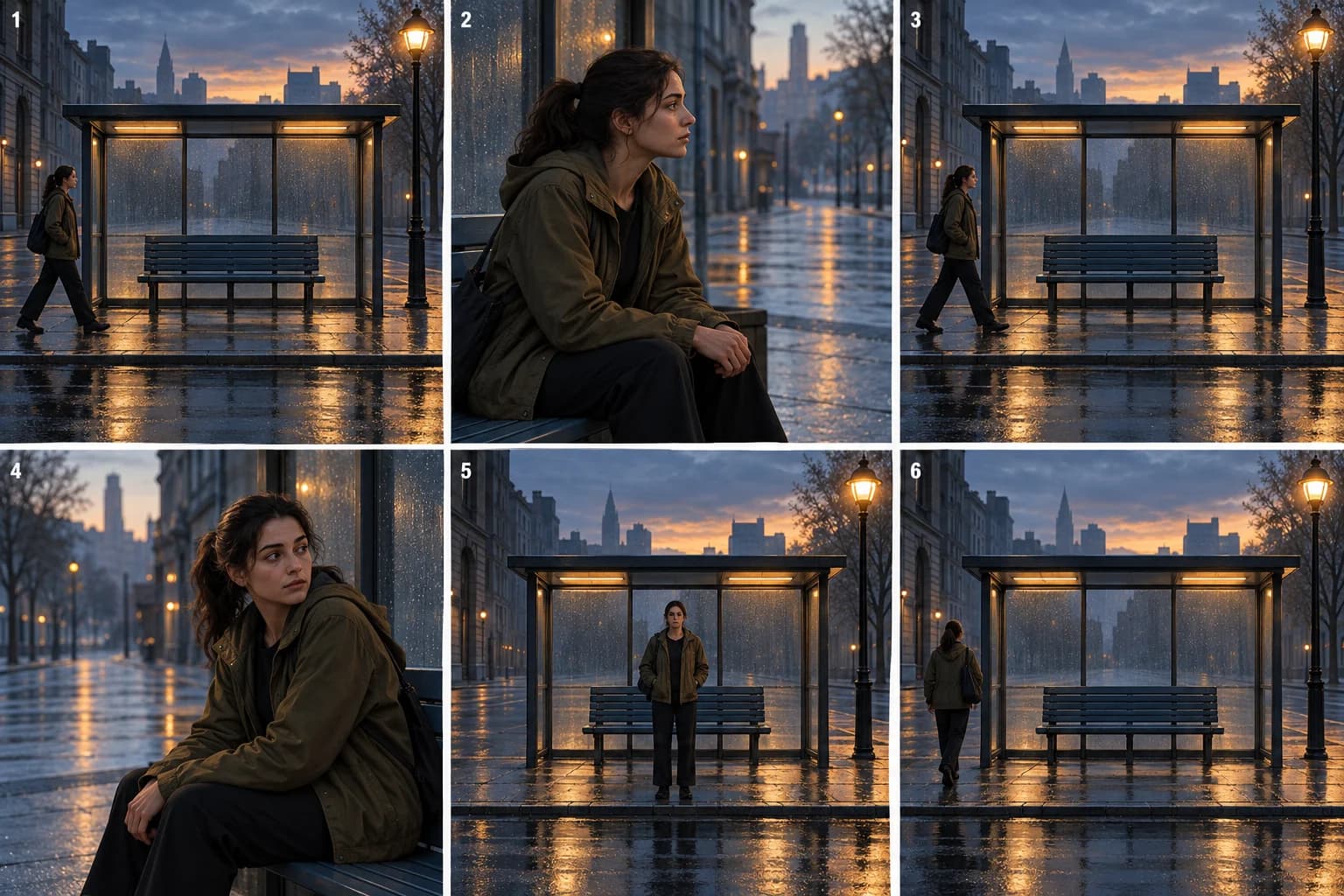
Narrative loop music video: repeat a scene, change its meaning
Build a narrative-loop music video around a recurring street scene. Follow six illustrated beats and learn what to repeat, change and resolve.
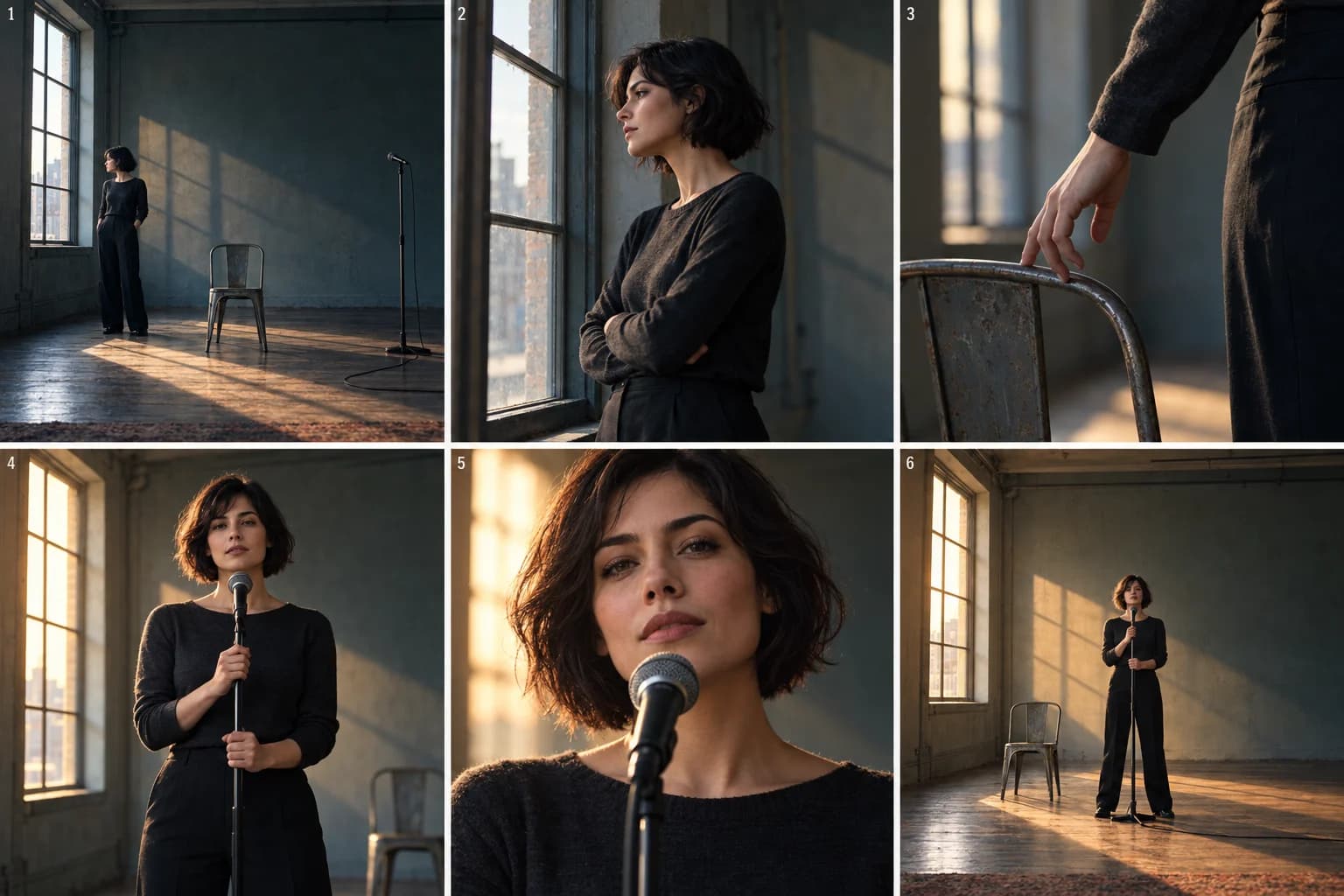
One-room music video: a performance treatment example
Build a one-room music video around one performer. Follow a six-beat treatment using framing, light and movement, then adapt it in VibeMV.
Retro music video: build a look that belongs to the story
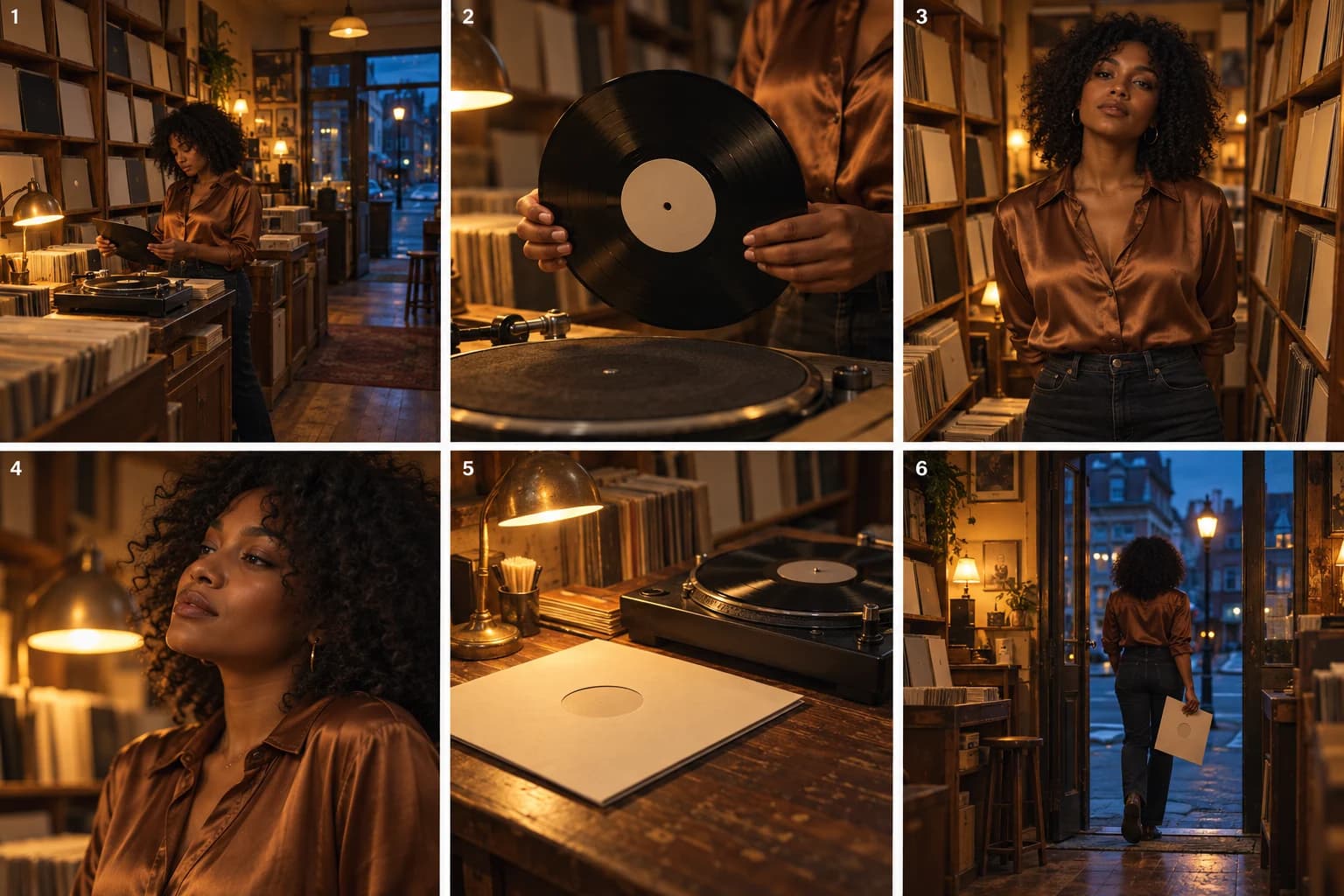
Plan a retro-inspired music video through a record-shop story. Connect props, lighting and framing with six illustrated beats and practical VibeMV directions.