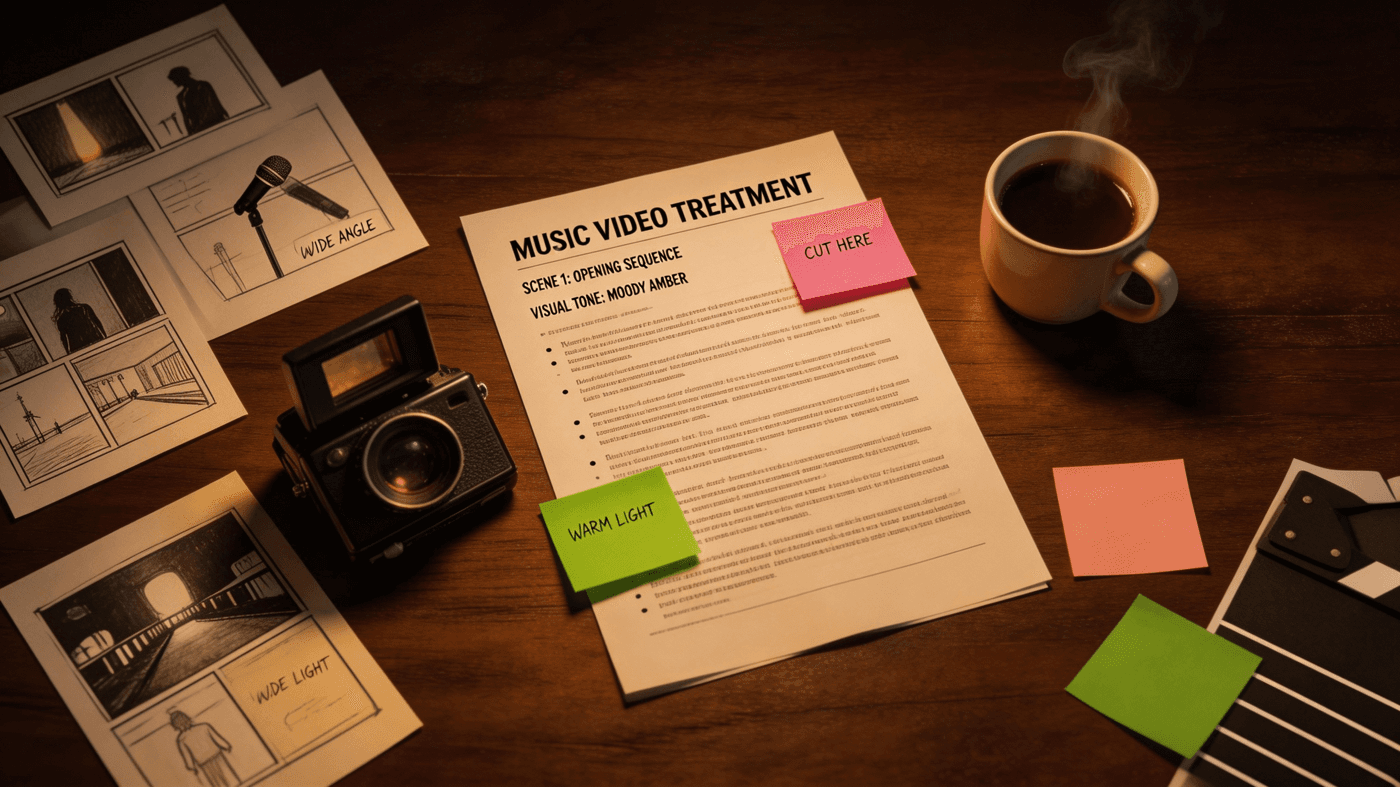
A 60-minute workflow. Not the full writing framework.
Use this page when you need a reviewable first draft tonight. For how to write the short intro, each section, and the send checklist, use the pillar guide. This sprint only owns the clock.
Role of this page: fast workflow. For the full writing framework — including how to write a short music video treatment intro — see the pillar writing guide. If you still need the definition, read what a treatment is. If you want packets to compare, use the 10 examples.
You do not need a shorter process. You need a stricter one. This sprint produces a usable first draft, not a sign-off document. Paste empty headings from the blank template if a bare page slows you down.
The 60-minute treatment sprint
Each block has a hard stop. When time ends, leave the weaker sentences and move. You can repair one section in the last five minutes. You cannot repair six sections you never started.
Minute 0–10: Core brief
Write only:
- What should the audience feel at the end?
- What is the central change or tension?
- Three "do not" pictures.
Output: one-sentence logline, 3–5 tone words, 3 constraints.
Do not write style yet.
Minute 10–20: Intro + concept
Paste the copyable intro and fill the brackets. Then write two short paragraphs: premise, then emotional progression.
Stop if you are still decorating the first sentence. A complete intro beats a perfect sentence.
Checklist: no camera jargon, no shot list, no opposite moods in the same line.
Minute 20–30: Look rules only
Write four rules, not a look essay: color, light, movement, texture. One sentence each. Example shape: "Camera stays still before the chorus and moves only after the first break."
If you need the longer "how to phrase look & tone" notes, steal the mini template from the section guide and come back.
Minute 30–45: Beats, not shots
Map the song into 4–6 blocks (setup, build, break, peak, release). For each block, write three words each for emotional job, picture job, and what must not change.
This block is the alignment value of the draft. Do not spend it on adjectives.
Minute 45–55: References with intent
Pick 2–4 stills or clips. For each, one line: borrow / where / do not copy. Taste-only picks wait until after the sprint.
Minute 55–60: QA, not polish
Ask only:
- Can a reader say the concept back in 30 seconds?
- Is the look specific enough that two people would draw the same world?
- Could someone start a storyboard without reopening the concept?
If any answer is no, fix the weakest block. Do not start a new concept.
What you should have at 60 minutes
A 1–3 page draft (about 500–1,000 words) with:
- logline
- short intro (from the pillar template)
- concept summary
- look rules
- 4–6 beats
- references + intent
- constraints
- one open-questions line
That is enough to send for a first reaction. It is not enough to pretend you skipped the send checklist.
For page count and section order after the sprint, use the format guide. For treatment vs board, use the comparison.
Sprint failure modes
- 30 minutes on the first paragraph. Paste the intro template and move.
- No constraints. Approvals collapse later. Write must-have and must-avoid even in a messy draft.
- Random pictures instead of beats. Every block needs an emotional job.
- References with no intent line. You invited a taste argument.
- Rewriting the pillar inside the hour. If you want craft, stop the timer and open the full framework. This page will still be here tomorrow.
Optional after the draft, not instead of it
If you want a moving sketch of the look, preview a few scenes in the AI music video generator. Do that after the 60 minutes, not during them. The treatment hub collects the product-facing template pages; this sprint does not require it.
Frequently Asked Questions
How fast can I make a treatment draft?
With a song brief and a few references ready, a reviewable first draft can take about 60 minutes if you time-box each section. That draft is for alignment, not final sign-off. Use the pillar when you need the intro craft and send checklist.
What should I finish in that first hour?
Finish a logline, a short intro, a two-paragraph concept, look rules, 4–6 song beats, two or three references with intent notes, and a short constraints list. Skip shot lists and deck design.
Is this the same as the full writing guide?
No. This page is a timed workflow. The pillar guide owns how to write the short intro, each section, common mistakes, and the send checklist. Use this sprint to produce a draft; use that guide to make the draft approvable.
Should I include storyboard detail in a 60-minute treatment?
No. Keep framing, lenses, and shot order for the storyboard. A fast treatment stays directional so you can revise it in one pass. See treatment versus storyboard.
What is the biggest mistake in a 60-minute draft?
Spending half the hour on the opening paragraph, or jumping to style before a logline exists. Lock the idea in the first ten minutes, paste the intro template, and move.
Can I paste the intro template into this sprint?
Yes. Copy the short intro from the writing guide at minute 10, fill the brackets, and do not polish it again until the QA pass. That is the fastest way to get a readable first page.
Industry references
More Posts
![10 Music Video Treatment Examples You Can Actually Use [2026]](/_next/image?url=%2Fimages%2Fblog%2F10-music-video-treatment-examples.png&w=3840&q=75 "10 Music Video Treatment Examples You Can Actually Use [2026]")
10 Music Video Treatment Examples You Can Actually Use [2026]
10 detailed, adaptable music video treatment examples with concept logic, scene progression, visual rules, references, and revision notes.
How to Write a Music Video Treatment (With Intro)
Learn how to write a music video treatment — and any short video treatment — with a copyable intro, section templates, and a send-ready checklist.
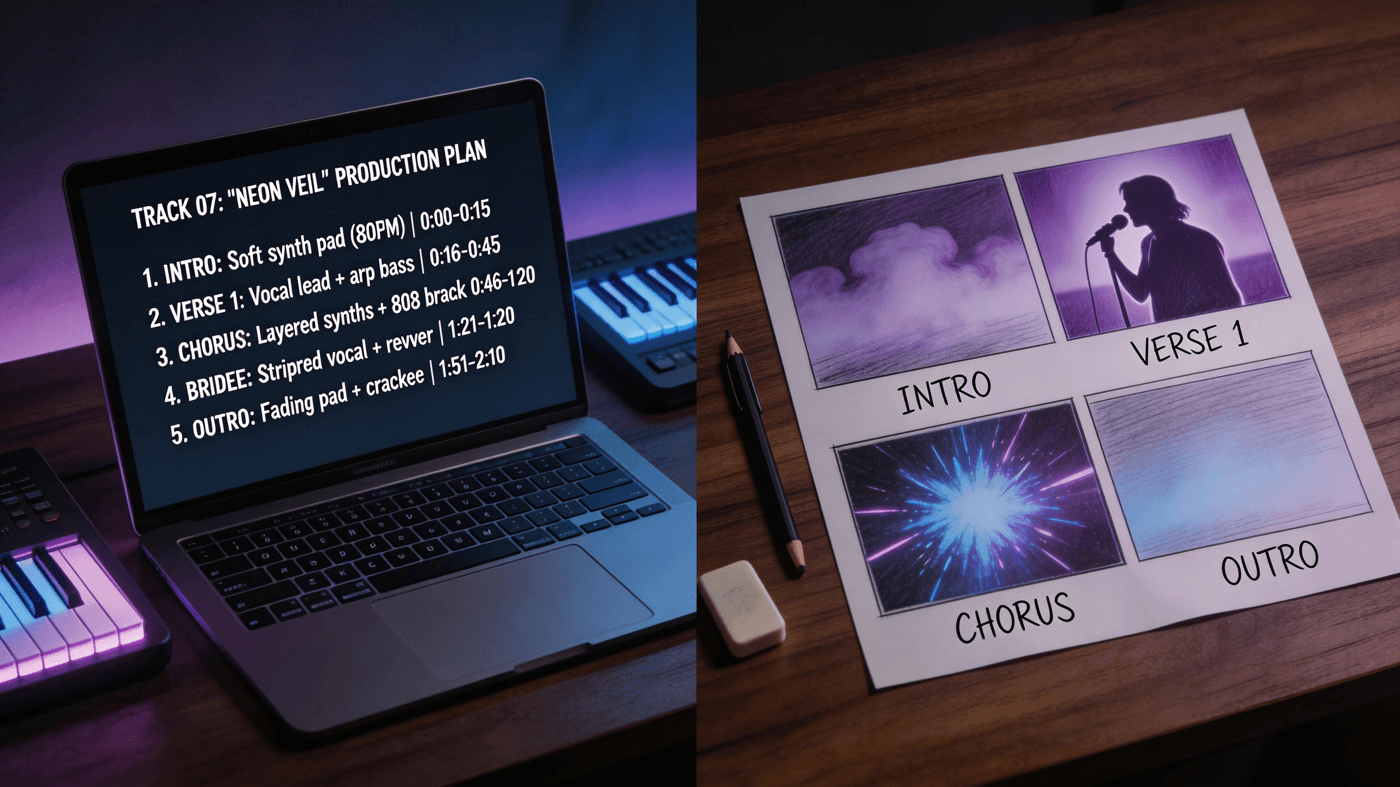
Music Video Treatment vs Storyboard (2026)
A practical comparison of music video treatment vs storyboard: purpose, timing, ownership, level of detail, and handoff process.